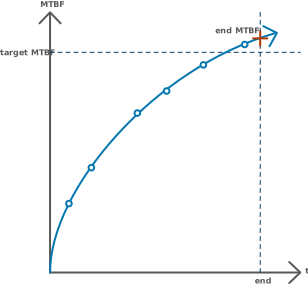
Learning systems - increasing reliability.
Reliability growth describes the increase in product reliability during development.
The practical foundations of this methodology go back to the work of Duane and Crow, who showed that reliability increases during the development process can be achieved according to certain laws – and can be described mathematically and statistically.
Significance for product development
For many companies, product reliability is a clearly defined development goal that is often even specified in binding specifications. Achieving this target reliability must be continuously monitored and controlled during development – a clear area of application for reliability growth.
Consistently applied reliability growth leads to a significant reduction in field failure rates, especially during the warranty and goodwill period.
This is achieved through:
- Early detection of problems in tests accompanying development
- Rapid elimination of causes
- Verification of the effectiveness of measures within the test phase

Goals and benefits of reliability growth
- Early detection of whether a defined target reliability (field failure rate) can be achieved
- Review of the effectiveness of implemented remedial measures
- Measuring whether process changes increase the speed of reliability growth
- Increasing the effectiveness of the entire development process
This makes reliability growth a central tool in risk management and continuous process improvement.
Our services
- Recording and evaluation of error data generated during product development
- Development of a management reporting system that shows the reliability status based on tests during development and highlights current risk areas
- Determining the speed of reliability growth
- Development of efficient systems for fault data acquisition
In combination with other methods
